Showing posts with label Jessi. Show all posts

Sunday, May 6, 2012

New camera and other things

Recently, we got a new camera since the old family camera was failing after taking thousands of pictures. The new one has 20X zoom, which is really nice because I like to take pictures of wildlife.
A blossom on one of our berry bushes.


A curlew who was being photogenic, even if it was rather hard to spot.


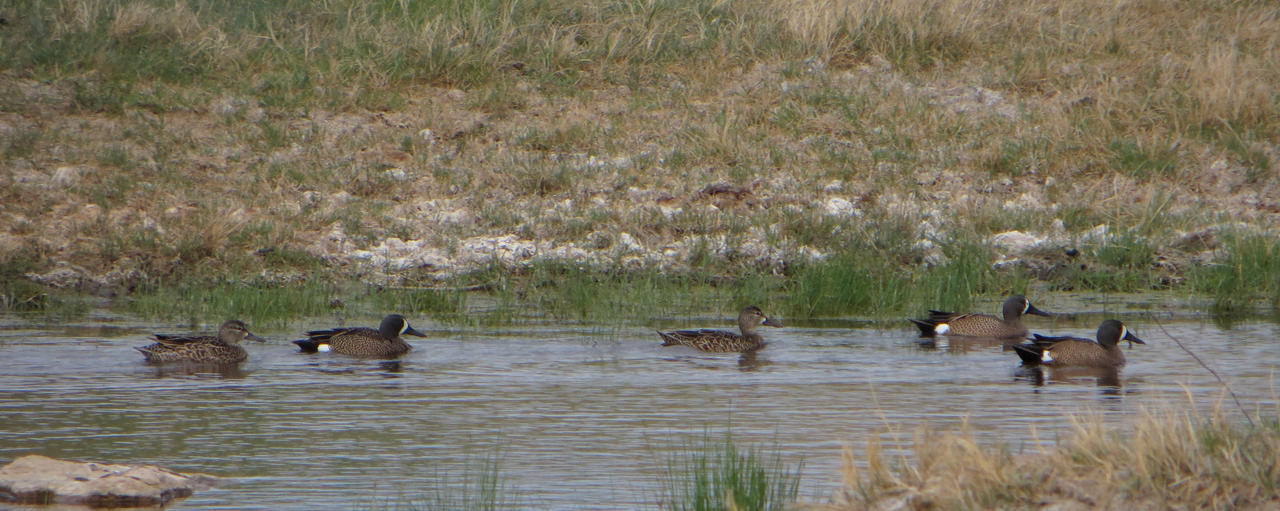
Blue wing teals. For some reason, the bird book says they're shy but they're not as wild as some other duck species in the area. (Perhaps less people hunt them?)

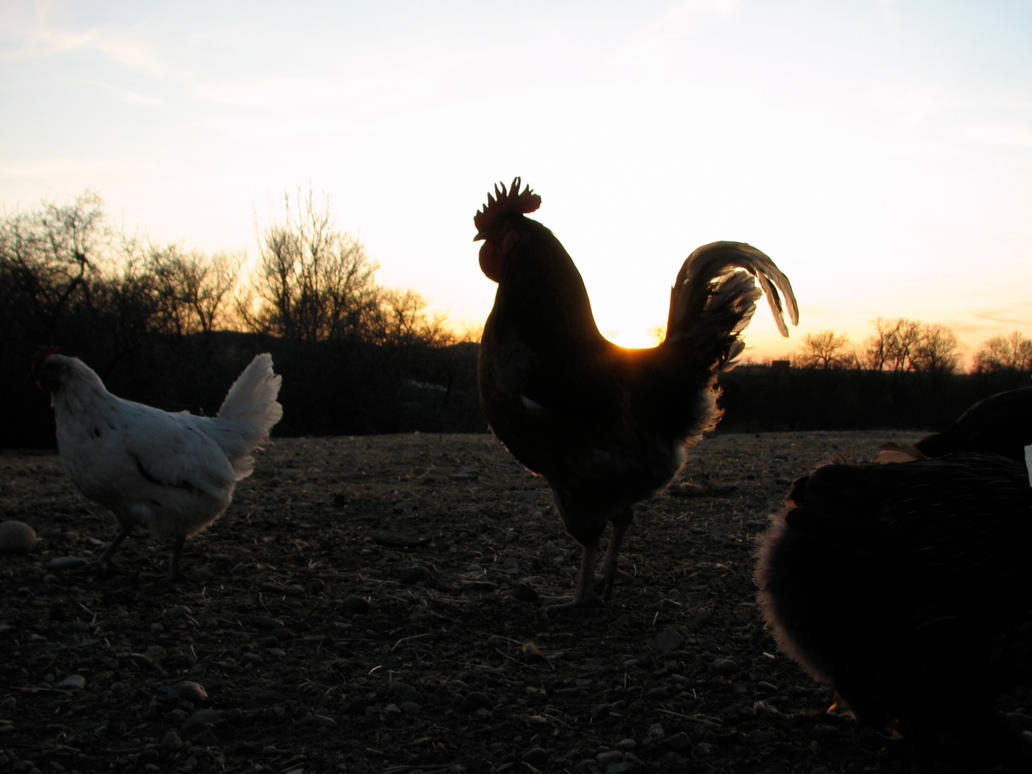
It works well for taking pictures of the moon too. I got this one when I went to let the chickens out a little before dawn.


On another note, I've been letting my chickens out at dawn, which seems to have helped increase egg production. I've read some things that say not to let hens out until they're done laying since they could lay outside, but from what I've seen, chickens seem to eat less feed and lay better if they're allowed out early. I think the benefits are greater than the risks, even if I got some surprise chicks last year for the first time. Here's some pictures of the hen and her chicks that I never got around to posting.


Since I hatched some chicks late last year, I haven't hatched any this year.


Here's another picture taken shortly before we got the new camera.

And now for a little cartoon I drew.
The real reason aliens abduct cattle.


Jessi

Saturday, July 9, 2011

Water

A while ago, I went canoeing on our reservoir and got some pictures. Most of them are a few weeks old since I was slow getting a blog post up.
The reservoir is completely full and doesn't really look like something from the Montana plains.

Some geese with large goslings.

A pair of goslings who thought Sam and I were after them. (One is surfacing after diving underwater.)

My silkie hen, Cotton, and her chick. (She is a really good mother.)

A neat cloud to the northeast of our place.


Jessi
Monday, May 23, 2011

New calf

Yesterday, Angel, my Holstien milk cow, had a heifer calf that is three quarters milk cow. To our surprise, she is whiter than either parent. I think we will call her Ivory, or Ivy for short.

If you look closely, you can tell the black hair is flecked with white, so what black she has will probably turn out to be more of a blue roan color like her older sister, Misty.

Here are our other three calves, Snowball(the big black bull), Molly(The black and white heifer), and Elf(The little brown heifer.)

Here is a close up of a dandelion.

And we also have tulips and daffodils blooming.


Jessi
Saturday, April 30, 2011

Telling the gender of chicks and other things

Earlier in April, I hatched out 36 chicks and bought ten more pullets from Runnings.
Since people are always wondering if their favorite chick will be a hen or rooster, I decided to make a post about it. These pictures were all taken before the storm.
One way to find a cockerel is to look at combs, like on this chick. (His comb is unusually large, even for a cockerel.) Pullets don't start getting much for combs until they're much older.


Here's a more normal looking cockerel. One way to tell he's a cockerel is because of his comb. He was also clucking for the young pullets whenever he found something to eat.

Another good way to tell is how their bodies develop. Some cockerels end up getting bigger than pullets but they have fewer feathers like this one does. (Note the normally feathered chicks in the background.)

Overall, it is a lot easier to tell what is a pullet and what is a cockerel if all the chicks are the same breed. With all my mix breeds, some tend to mature slower and that makes it harder to tell what gender they are.

Here's a picture of the chicks when they were younger and cuter.


The geese are also nesting. Here's a picture of a nest I found. The nest is two feet above the water.

We had a power outage on Saturday and Dad had to hook the generator up to the chicken coop to keep the chicks warm. DJ will post more details on that.

Jessi

Wednesday, March 9, 2011

Wolf

For practice, I decided to draw one of my wolf characters howling. I thought some of you might want to see how I did it. Since I only saved the final product, all but the first image are layers of the final result. This is why you can't see what I changed part way through the drawing.
Night scenes are much easier than normal drawings since they're dark enough very little shading is needed.
I started with a basic sketch done on paper. I only used a little reference for the wolf's head.

Next, I made a basic sky for the back ground. It was pretty easy to do since I used the gradient tool on Photoshop.

I used my lineart to do a silhouette of a wolf with a slightly darker color than the sky. (You can't see it since this is only some layers of the final result and I deleted the lineart layer.) When I first did it, it was more like the drawing but I used copy and paste to turn the head so it had a shorter neck. I also changed the mouth a little so it looked better.

Here, I added the light from the moon. It's a lot easier than it looks. For the highlights, I chose a color that was lighter than the sky. I also added some stars.

I decided the rock's highlights made things too bright so I put a darker color over the rock to darken it. I also added the darker spots on the moon. I flipped the picture around because I realized my wolf had the wrong ear torn. That might have messed up my moon a little and it's now backwards. (I had to look at a few real moon pictures to do the moon.)

I used Photoshop CS4 and a Wacom Bamboo fun drawing tablet. If you want to experiment with digital art, you can download a free program called GIMP, which I used before I got Photoshop.

Jessi

Saturday, December 18, 2010

Haying the chickens

For those who are wondering, we give the chickens hay in the winter. Chickens don't like to walk in the snow so they need to have boards, or hay or something to walk on if you want them to go outside in the winter.

Here's the inside of the coop. As you can see the turkey gets the highest perch, in this case, the door. This picture was taken during the daytime so not all the chickens were on the roosts. They just like to perch when they're not doing anything. (Chickens who are hurt or sick often perch to avoid being picked on.)

In the winter, I let the chickens in the brooder room. I have the saw horses there for perches so they can perch in here if they want.

Danny spotted and photographed this hawk perching on his beehives. I think it's a female goshawk, which worried me a little since I've had trouble with goshawks and Cooper's hawks getting my younger chickens. Luckily, I think she was just passing through.

Mom and Danny spotted this hawk. I'm not sure what it is. Any guesses? I'm guessing it's in the Buteo family, meaning it's related to red-tails and rough-legged hawks.
In the background, you can see some of our calves grazing.

Here's an older picture of a rough-legged hawk.(note the feathers on the hawk's legs)

When it comes to chicken eating varmints, I generally consider hawks one of the least dangerous predators. Unlike most mammals, hawks and owls aren't the type of animal who gets into a chicken coop and slaughters every last chicken. Around here, we mainly have long-eared owls, great horned owls, kestrels, red-tailed hawks, and rough-legged hawks. None of these species have ever killed any chickens. (Though I have no doubt the great horned owls would eat a chicken if one was sleeping outside.) The best way to protect your chickens from hawks is to have lots of cover (like trees and brush) for the chickens to hide in. Owls shouldn't be a problem since chickens should be in their coops at night where they are safe.
The only chickens I've lost to hawks have been young ones who were lost when the goshawks and Cooper's hawks migrate through in the fall. Luckily, we've never had one of those take up permanent residence here.

Jessi

Saturday, July 10, 2010

Drawing Sam

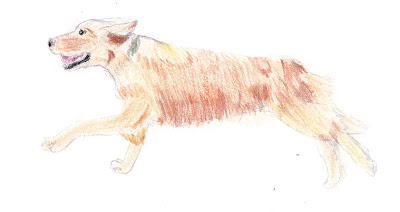
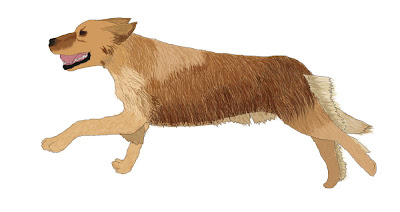
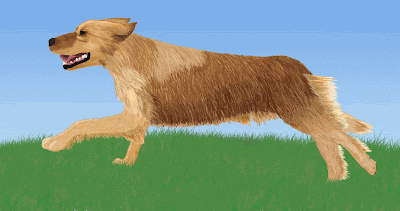
Since I like to draw, I decided to post how I digitally drew a picture of Sam.
First, I drew and colored a picture of him and scanned it onto the computer.
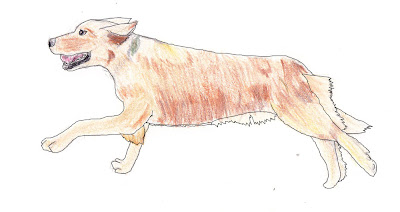
When I got it on the computer, I drew lines on it so I knew how to color it. (The lines are on a separate layer.)
After I did that, I used a grass brush to draw the base coat of fur. (This was done on a layer just under the lines.)
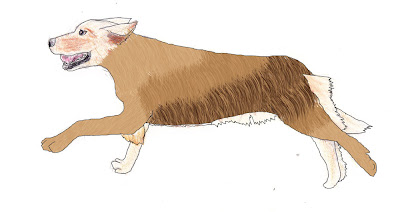
I then used the mouse to draw the main fur that you can see on a layer above the one in the above picture. Unlike the base coat, I had to make sure it went the right way.
To finish off, I blurred the fur so it looked more fuzzy, put shadows and highlights on the head, and I added smaller furs and stuff around his head. After that, I added grass with the grass brush and made the sky.
I used a picture as a reference. The program I use is Photoshop CS4. For someone who doesn't want to buy Photoshop, my advice is to download a free program called GIMP. Though not nearly as good as Photoshop, GIMP is a good program to experiment with.

Jessi

Tuesday, June 1, 2010

Chickens and stuff

I decided to do a post on chickens in general. Here is a picture of the chicken coop. As you can see, it has three rooms in it. The room in the middle is the main coop. The room on the right is the brooder room. The other room is a spare room.

In the main room, the roosts are attached to a rope so I can easily lift them when I clean the coop. The feeder is under the nests.

The brooder room. The extra saw horse is for the chicks to perch on. (This picture is an older one so the chicks are smaller. The really small chicks are the broilers and leghorn.)

One of the chicks. These chicks are now free ranging but they don't go far from the coop yet.

A few weeks ago, my family went to town but I didn't go with them. They called and said that there were some chicks at the feed store but from the description, I thought they were close to the age of my chicks. I told them to get five white leghorns. It turns out they were about three or four weeks younger than my chicks. After I got them, I kept a close eye on them to make sure the other chicks weren't bothering them. Everything seemed fine until I realized four of the five chicks were not white leghorns but cornish crosses. I figured it might be a good thing they were broilers since they would grow fast so they'd catch up with the other chicks.
All was going well until I got a cold. Mom was taking care of my chickens when the other chicks decided the broilers, who by this time were about the same size as the other chicks, tasted good. Luckily, I went to the coop before they were all killed. One was dead so I separated the three remaining broilers and the leghorn and put them in the other room.
Pictured here are the three broilers and the one leghorn. They are the same age and you can see the difference in size and shape.

Here are the wild geese and their goslings. This is the first year they've raised their goslings on our reservoir.

They are a little older in this picture.

Jessi

Saturday, March 27, 2010

Chicken breeds

I noticed a post in The Poultry Journal about breeds of chickens so that inspired me to tell about the breeds I've had over the years. I haven't been able to figure out what breeds lay the most eggs since I have so many breeds in the same coop. I often order pullets so I rarely get roosters. I don't think I've got all the breeds listed here since I only had a few birds of certain breeds and I didn't have anything to say about them. Here are some of the breeds I've had:

Golden Ca
mpine ~ I never had many of these but they are pretty. The roosters don't have normal saddle feathers. The rooster got frostbite on his comb during the winter. In this picture, he does not have a tails since he lost it to cannibalism.


Silver and golden Lakenvelders ~ I only had hens of this breed but they were nice hens and they tend to be pretty healthy. I also noticed that the scaley leg mites don't bother them as much as some other breeds. (The chicken in the back is a mutt.)


Buff Orpingtons ~ The hens are calm and range long distances which I like. It seemed like it took a long time for the cockerel to mature which seems common in the heavier breeds.


Rhode Island reds ~ I only had two hens so I can't say much about them.

Cookoo Marans ~ I only had hens.. I liked the dark shelled eggs.


Welsumer ~ The hens I had seemed to be good birds that weren't too wild flighty.


Si
lver Spangled Hamburgs ~ Hamburgs have a very rebellious streak. Mine decided they wanted to sleep outside so I had to bring them in at night. Next thing you know, they're laying eggs outside so I had to start hunting nests. (The remaining one I have does behave.) Because of their small size, they lay smaller eggs. They are very hardy birds though. The rose comb is a trait I'd like to breed into my flock since rose combs seldom get frost bite. The Hamburgs do tend to be flighty and they are very good at flying. They have a body built like an overgrown bantam.


White and Brown Leghorns ~ These chickens are considered good layers by many people. I have no brown leghorns left but I still have some white leghorns. I've had some that died on me but others seem pretty healthy. The white leghorn hens seem very calm and are quite intelligent. They range a fair distance too. The biggest problem is that the roosters have a huge comb that tends to get frozen in winter.

Silver Phoenix ~ This breed is smaller than a Hamburg but larger than a bantam. Even with their small size and the fact that they can fly well, they tend to be calm. The problem is, they also lay small eggs. They are very broody but I've never let one raise chicks so I don't know if they're good mothers or not.


Partridge Plymouth rocks ~ This breed will travel a long distance to forage. We lost three to heat stroke. They will go broody and raise chicks too.
(The Plymouth rock is the brown one. The one beside her is a buttercup and the one under her is a buff silkie.)


Polish ~ I got a Polish mix and got about one of each breed. None have died yet but I had one hen who had an eye problem and is now sickly and blind in one eye. These chickens aren't really something you want for your layer flock. Some are healthy and do fine but in cold weather, the ones with really big top hats tend to get the feathers wet then the water freezes so the bird has icicles on its head. Because of their top hats, they're easy to catch so I'm guessing predators would think the same thing. (I had to cut the feathers that got icicles off some of the Polish and I also cut some feathers so another one could see better.) I haven't had much trouble with the other chickens picking on their head feathers. The rooster I kept was aggressive and had to be butchered. The cross breed chicks I got from the Polish tend to have smaller top hats that are not a problem. I personally like half Polish birds better than pure Polish.

Molted Houdan ~ I've only got one hen so it's not much to go on but she's a calm hen. She has the huge top hat that can be a problem but it's not as big as the top hats of some of the Polish.


Black Sex link ~ These bird are good sized and seem to be good hens for laying.

Gold Star sex link ~ The ones I have now are very
intelligent and calm. I really like them because of their laid back personality. They tend to be good foragers too. (If stealing dog food counts.)


Dark and Light Brahmas ~ I had one light Brahma that was hatched in '02. She died last winter at age seven so these are pretty hardy birds. The Brahma cockerels take a long time to mature so they're not a very good breed for butchering because the other breeds of cockerels are ready to butcher before the Brahmas are. They are a very calm breed and the one that hatched chicks was a good mother.


Easter Eggers ~ These are pretty laid back hens and they were good layers. I've still got one that was hatched in '04 and she lays pretty well but the egg shells aren't perfect any more. Some of the Easter egger roosters can get to be very large while others are medium sized. Their combs don't get frost bite easily.

Black and Buff Minorca ~ These hens reminded me of l
eghorns because of they look a lot like them. They are nice hens and lay good sized eggs. One hen killed a pheasant chick that hatched under her. Some of them are good foragers.

Blue Andalusian ~ These hens are a lot like Minorcas and leghorns because they have the same body structure. They will come up to the front yard so I class them as good foragers.

Black Australorp ~ These chicke
ns were good layers. One hen would kill chicks if her eggs hatched but another one was an excellent mother. I have an Australorp/brown leghorn cross and she's seven years old and still lays eggs regularly. She is also a very good forager.

Gold and silver laced Wyandottes ~ I only had three of these birds. If I remember correctly, at least one of them was a bully toward the other chi
ckens.

Sicilian buttercups ~ I thought it interesting that these birds were a light breed but the body structure reminded me of a larger chicken. They were not too flighty.

California greys and whites ~ They are much like white leghorns and they have an intelligent personality and are good foragers.


Blue, black, buff, and white silkies ~ This is not a breed for anyone who wants eggs. If you want a natural incubator, this is the right breed to get. I never trusted the blue one with chicks because I caught her pecking one but she never killed any. I put five eggs under each of them and kept two of the birds in the same box while they were setting. Using this method, they would fight over any egg in sight and thus keep the eggs underneath them. Since they liked to sit in low nests, it was easy to train them to stay in a box on the floor. My other hens like high nests so they generally left the silkies alone. I've hatched a turkey egg, a pigeon egg, duck eggs, and chicken eggs under silkies. They normally don't range too far from the coop and they can't fly.


Old English bantams(I think) ~ I got three of these tiny things from a friend and I think they were Old English but I'm not sure. I have no idea how old they were when I got them and two have died now. The other one no longer lays eggs. One was a good mother and another one went broody on a hidden nest and died. They seemed to be resistant to scaley leg mites. (I think they may be the ones who brought the mites into the flock.) The surviving one is calm and not flighty.


Other Poultry

Turkeys ~ I had some black mixed breed turkeys. They went wild but I managed to grab some of their eggs and hatch one. The turkey poult was raised with the chicks and seems to think she's a chicken. She does lay in the summer but tends to go broody. Turkeys are the smartest species of poultry I have had. One of the original seven turkeys had a broken leg and the others would stay close to her and protect her from the wild turkeys that they eventually joined. The tame turkey hen I have now sometimes lays in the chicken nests even though she is too big. (She hasn't laid any good eggs this year.)
So far, I have had no problems with blackhead even though the turkey is with the chickens every night. She is a bit of a bully since she's the biggest bird in the coop.


Ducks ~ I had three Roan(I think) ducks, one female and two males. (One was butchered early on.) They like to try to flip water out of the water buckets to take a bath and it makes a mess. They also fill the buckets with mud. I never figured out how they can get that much gunk in a bucket when the coop has just been cleaned and new wood shavings are on the ground. Before the hen got sick, she laid eggs almost every morning. One thing I like about ducks is that they herd well so I could herd them to the creek in the morning. After some training, they stayed at the creek all day and came back at night. Later on, they started staying there over night but I think they did that because the hen was sick and did not want to go up the hill to the chicken coop. After she died at the creek, we butchered the remaining male. I like duck meat almost more than chicken but ducks don't have much meat on them. They're all bone.


Ring neck pheasants ~ I got the eggs when dad cut hay and ran over the nests. If you think chickens are dumb and flighty, just get a pheasant. The things have a death wish and I could write pages on the different ways they will kill themselves. If you get some and more than fifty percent make it, you did a good job raising them. I found out the best way to raise them is with a hen or chicks that are slightly smaller than they are. They will never get tame and most are so flighty that they can harm themselves in an attempt to escape people.