Saturday, May 29, 2010

May

I thought I would tell you about how our month went as it draws to a close. It started out kind of cold, but warmed up as the month progressed. We started calving late in April and into May. We are pretty much calved out now. We didn't have any real trouble calving so we are thankful for that. Danny also picked up his bees early in the month. You can read all about it on his blog, Beeginning Beekeeper. One of the biggest highlights was we had much more rain than usual. (More on this later.) Dad fortunately got the alfalfa seeded across the river before it started raining.

Here is a picture of Blue Mountain that was taken on the twenty-first of May,

Like I said, it was much wetter than usual. These are pictures that were taken the twenty-second when there was supposed to be a branding. Needless to say, the branding was postponed.

Last night at about 12:45 I woke up to rain and hail hitting my window. Luckily the hail didn't get too bad. When I checked the rain gauge this morning this is what I saw,

Our other rain gauge showed an inch, but I didn't take a picture because the markings are almost worn off. With this rain it increases the rain for the month to around five inches!

Our neighbor who lives about ten miles away has a weather station you can check from the internet and see stuff like temperature, rain, and other stuff. You can access the weather station here. This is what it shows for rain right now.(They only got three tenths last night when we got an inch though) Update: I just found out that it updates on here so now the month rain is for June.
That is a lot of rain for where we are. We might have gotten even more than they did though. I think our average yearly precipitation is around ten to twelve inches so we already have a really good start.

It is really wet so the grass is growing and should continue to do so.

Looking west,


Towards Danny's beehives,

Looking south towards some of our cows,

Looking east,

We collect water off some of the house and shop for Mom's garden because our well water has high alkalinity and isn't good for plants. With all the rain we've gotten we figure we have about 11,000 gallons of rain water stored! We won't be able get anymore though because we ran out of water tanks. What a good problem to have!

Here is a picture of the shop with the 1,600 gallon water tank. There is another tank in the shop that holds about 1,800 gallons.


This is a picture of Mom's new garden.(Notice the water tanks on the left side of the picture.) She has another garden by the creek, but she watered it with well water(when we didn't have rain water) so the soil isn't very good and gets really hard. We still planted stuff in it just in case this one didn't work out. This is the first time we have planted this much in the new garden. We only planted potatoes and a few other things in it last year. Dad put manure on it and plowed it last year. He disked it in April and we (mostly Mom because all of us kids got sick) planted it.

Here is some corn that is coming up,

Some radishes,

The onions came up really fast,

We tried putting plastic on over the watermelons to keep them warmer and moist and it seems to be working. The only problem we had was the plastic kept trying to blow off. Notice all the dirt we have on the edges.

Here are some of the watermelons that are coming,
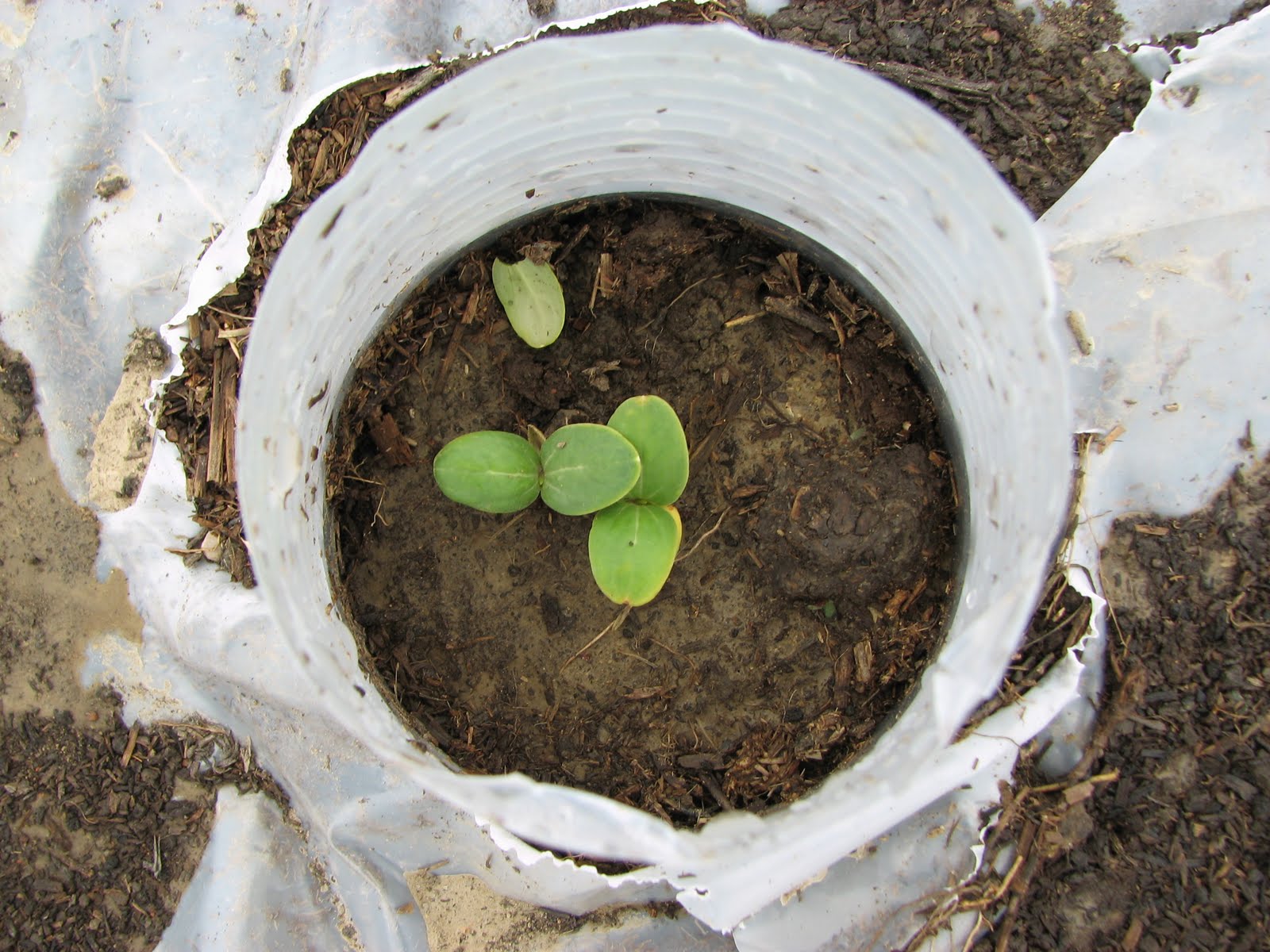
The peas seem to be coming really well. That is good because they never have come very well in the other garden.

A picture of our house,

D.J.

Sunday, May 2, 2010

Snow

Today we woke up to a couple inches of snow. Yes, that's right, snow in May. Here are some pictures.

Looking east,


Looking west towards the barn,

A picture of the snow and grass,

By afternoon the snow had all melted off and the sun even came out. As you can see from the pictures it is starting to green up due to getting about an inch of rain in the last couple of weeks.

Here you can see Blue Mountain,

Here is a picture of the sun,


I hope it warms up a little bit since we are now calving. We normally try to fly every day to check on the heifers that are calving. All that flying is just fine with me though. :)

DJ

Sunday, April 4, 2010

Happy Easter

The eggs I put in the incubator started hatching on the 30th, one day before they were supposed to hatch. Only two hatched that day. Most of them hatched on the 31st but one hatched on April 1st. Normally, the hatch drags out more than that. I think the reason they hatched more uniformly this time is because I swapped the eggs close to the edges of the incubator with the ones in the middle of the incubator twice. (The temperature in my incubator varies and eggs near the edges aren't as warm as the ones in the middle.)
All in all, it was a reasonably good hatch. Out of 54 eggs, I got 41 chicks. About eight eggs were infertile and five died before hatching. Normally, I have a lot of eggs that get a small hole in the shell and then die but this year, the only one that died when it was near hatching was backwards. (For you cattle people, when I say the chick was backwards it means that the chick's head was in the small end of the egg.)
I think the reason I had less die near hatching was because I got the chicks out of the incubator as soon as they hatched. Sometimes, chicks in an incubator will roll the hatching eggs upside down and the fluids in the egg will drown the hatching chick. (When I say upside down, I mean the chick's beak end up on the bottom side of the egg.)
I have a still air incubator so I tried to keep the temperature at about 102 on top of the eggs. I moved the thermometers around the incubator to make sure that there were no really cold or really hot spots. I also candled all the eggs at least once a week so I could find the dead or infertile eggs and get them out of the incubator so they didn't take up space.


Here's the incubator with the eggs in it. Some have already hatched and you can see that a few are hatching. I tried to give each egg as much room as possible so the air would circulate well.

A chick that just hatched and is still in the incubator.

The first chick to hatch.

The chicks in their box. I leave them in the box until they're all done hatching and learning to walk then I put them in the brooder house.

This is a deformed chick. The outside and middle toes are connected by the webbing. So far, the chick seems to be able to walk fine so I'm leaving it alone.

Happy Easter everyone!

Jessi

Saturday, March 27, 2010

Chicken breeds

I noticed a post in The Poultry Journal about breeds of chickens so that inspired me to tell about the breeds I've had over the years. I haven't been able to figure out what breeds lay the most eggs since I have so many breeds in the same coop. I often order pullets so I rarely get roosters. I don't think I've got all the breeds listed here since I only had a few birds of certain breeds and I didn't have anything to say about them. Here are some of the breeds I've had:

Golden Ca
mpine ~ I never had many of these but they are pretty. The roosters don't have normal saddle feathers. The rooster got frostbite on his comb during the winter. In this picture, he does not have a tails since he lost it to cannibalism.


Silver and golden Lakenvelders ~ I only had hens of this breed but they were nice hens and they tend to be pretty healthy. I also noticed that the scaley leg mites don't bother them as much as some other breeds. (The chicken in the back is a mutt.)


Buff Orpingtons ~ The hens are calm and range long distances which I like. It seemed like it took a long time for the cockerel to mature which seems common in the heavier breeds.


Rhode Island reds ~ I only had two hens so I can't say much about them.

Cookoo Marans ~ I only had hens.. I liked the dark shelled eggs.


Welsumer ~ The hens I had seemed to be good birds that weren't too wild flighty.


Si
lver Spangled Hamburgs ~ Hamburgs have a very rebellious streak. Mine decided they wanted to sleep outside so I had to bring them in at night. Next thing you know, they're laying eggs outside so I had to start hunting nests. (The remaining one I have does behave.) Because of their small size, they lay smaller eggs. They are very hardy birds though. The rose comb is a trait I'd like to breed into my flock since rose combs seldom get frost bite. The Hamburgs do tend to be flighty and they are very good at flying. They have a body built like an overgrown bantam.


White and Brown Leghorns ~ These chickens are considered good layers by many people. I have no brown leghorns left but I still have some white leghorns. I've had some that died on me but others seem pretty healthy. The white leghorn hens seem very calm and are quite intelligent. They range a fair distance too. The biggest problem is that the roosters have a huge comb that tends to get frozen in winter.

Silver Phoenix ~ This breed is smaller than a Hamburg but larger than a bantam. Even with their small size and the fact that they can fly well, they tend to be calm. The problem is, they also lay small eggs. They are very broody but I've never let one raise chicks so I don't know if they're good mothers or not.


Partridge Plymouth rocks ~ This breed will travel a long distance to forage. We lost three to heat stroke. They will go broody and raise chicks too.
(The Plymouth rock is the brown one. The one beside her is a buttercup and the one under her is a buff silkie.)


Polish ~ I got a Polish mix and got about one of each breed. None have died yet but I had one hen who had an eye problem and is now sickly and blind in one eye. These chickens aren't really something you want for your layer flock. Some are healthy and do fine but in cold weather, the ones with really big top hats tend to get the feathers wet then the water freezes so the bird has icicles on its head. Because of their top hats, they're easy to catch so I'm guessing predators would think the same thing. (I had to cut the feathers that got icicles off some of the Polish and I also cut some feathers so another one could see better.) I haven't had much trouble with the other chickens picking on their head feathers. The rooster I kept was aggressive and had to be butchered. The cross breed chicks I got from the Polish tend to have smaller top hats that are not a problem. I personally like half Polish birds better than pure Polish.

Molted Houdan ~ I've only got one hen so it's not much to go on but she's a calm hen. She has the huge top hat that can be a problem but it's not as big as the top hats of some of the Polish.


Black Sex link ~ These bird are good sized and seem to be good hens for laying.

Gold Star sex link ~ The ones I have now are very
intelligent and calm. I really like them because of their laid back personality. They tend to be good foragers too. (If stealing dog food counts.)


Dark and Light Brahmas ~ I had one light Brahma that was hatched in '02. She died last winter at age seven so these are pretty hardy birds. The Brahma cockerels take a long time to mature so they're not a very good breed for butchering because the other breeds of cockerels are ready to butcher before the Brahmas are. They are a very calm breed and the one that hatched chicks was a good mother.


Easter Eggers ~ These are pretty laid back hens and they were good layers. I've still got one that was hatched in '04 and she lays pretty well but the egg shells aren't perfect any more. Some of the Easter egger roosters can get to be very large while others are medium sized. Their combs don't get frost bite easily.

Black and Buff Minorca ~ These hens reminded me of l
eghorns because of they look a lot like them. They are nice hens and lay good sized eggs. One hen killed a pheasant chick that hatched under her. Some of them are good foragers.

Blue Andalusian ~ These hens are a lot like Minorcas and leghorns because they have the same body structure. They will come up to the front yard so I class them as good foragers.

Black Australorp ~ These chicke
ns were good layers. One hen would kill chicks if her eggs hatched but another one was an excellent mother. I have an Australorp/brown leghorn cross and she's seven years old and still lays eggs regularly. She is also a very good forager.

Gold and silver laced Wyandottes ~ I only had three of these birds. If I remember correctly, at least one of them was a bully toward the other chi
ckens.

Sicilian buttercups ~ I thought it interesting that these birds were a light breed but the body structure reminded me of a larger chicken. They were not too flighty.

California greys and whites ~ They are much like white leghorns and they have an intelligent personality and are good foragers.


Blue, black, buff, and white silkies ~ This is not a breed for anyone who wants eggs. If you want a natural incubator, this is the right breed to get. I never trusted the blue one with chicks because I caught her pecking one but she never killed any. I put five eggs under each of them and kept two of the birds in the same box while they were setting. Using this method, they would fight over any egg in sight and thus keep the eggs underneath them. Since they liked to sit in low nests, it was easy to train them to stay in a box on the floor. My other hens like high nests so they generally left the silkies alone. I've hatched a turkey egg, a pigeon egg, duck eggs, and chicken eggs under silkies. They normally don't range too far from the coop and they can't fly.


Old English bantams(I think) ~ I got three of these tiny things from a friend and I think they were Old English but I'm not sure. I have no idea how old they were when I got them and two have died now. The other one no longer lays eggs. One was a good mother and another one went broody on a hidden nest and died. They seemed to be resistant to scaley leg mites. (I think they may be the ones who brought the mites into the flock.) The surviving one is calm and not flighty.


Other Poultry

Turkeys ~ I had some black mixed breed turkeys. They went wild but I managed to grab some of their eggs and hatch one. The turkey poult was raised with the chicks and seems to think she's a chicken. She does lay in the summer but tends to go broody. Turkeys are the smartest species of poultry I have had. One of the original seven turkeys had a broken leg and the others would stay close to her and protect her from the wild turkeys that they eventually joined. The tame turkey hen I have now sometimes lays in the chicken nests even though she is too big. (She hasn't laid any good eggs this year.)
So far, I have had no problems with blackhead even though the turkey is with the chickens every night. She is a bit of a bully since she's the biggest bird in the coop.


Ducks ~ I had three Roan(I think) ducks, one female and two males. (One was butchered early on.) They like to try to flip water out of the water buckets to take a bath and it makes a mess. They also fill the buckets with mud. I never figured out how they can get that much gunk in a bucket when the coop has just been cleaned and new wood shavings are on the ground. Before the hen got sick, she laid eggs almost every morning. One thing I like about ducks is that they herd well so I could herd them to the creek in the morning. After some training, they stayed at the creek all day and came back at night. Later on, they started staying there over night but I think they did that because the hen was sick and did not want to go up the hill to the chicken coop. After she died at the creek, we butchered the remaining male. I like duck meat almost more than chicken but ducks don't have much meat on them. They're all bone.


Ring neck pheasants ~ I got the eggs when dad cut hay and ran over the nests. If you think chickens are dumb and flighty, just get a pheasant. The things have a death wish and I could write pages on the different ways they will kill themselves. If you get some and more than fifty percent make it, you did a good job raising them. I found out the best way to raise them is with a hen or chicks that are slightly smaller than they are. They will never get tame and most are so flighty that they can harm themselves in an attempt to escape people.

Thursday, March 18, 2010

Wednesday

It was really nice outside yesterday. It got up to fifty-five as you can see on the picture below.

As you can see, quite a bit of snow has melted off, but there is still quite a bit in some places.

There was water running in some places.

Another picture of the water,

With the nice weather the calves were able to get out and graze.

DJ